Choosing Display Blocks for Collectibles
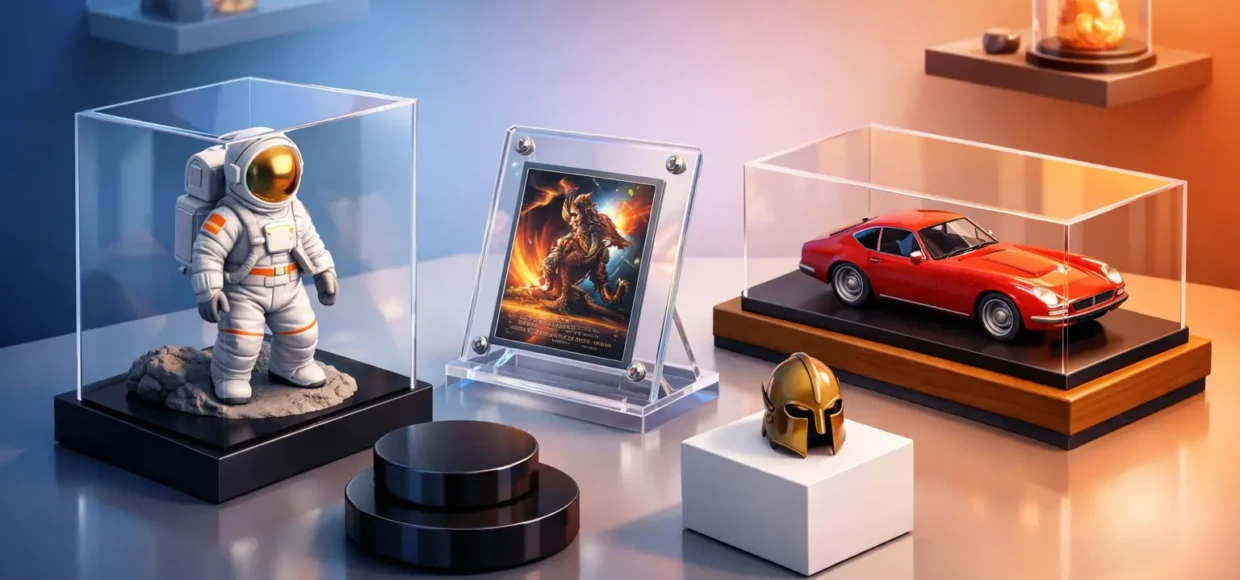
A collectible can lose impact fast when it sits on the wrong base. A rare coin, signed sports card, small sculpture, or limited-edition figure may have real value, but poor presentation makes it look ordinary. The right display blocks for collectibles solve that problem by adding elevation, visual separation, and a clean, professional foundation that keeps attention on the piece itself.
For collectors and retail buyers alike, the goal is not simply to prop an item up. It is to present it with control. A clear acrylic block creates that effect because it supports the object without competing with it. Instead of introducing visual clutter, it adds structure, height, and polish.
Why display blocks for collectibles work so well
Solid acrylic has a practical advantage that many display materials do not. It is clean-looking, durable, and visually quiet. That matters when the item being displayed already carries detail, color, texture, or branding that should remain the focal point.
Display blocks for collectibles are especially effective because they create separation between the object and the surrounding surface. That small change improves visibility immediately. A collectible placed flat on a shelf can disappear into the background. Raised on a clear block, it reads as intentional and higher value.
This is one reason acrylic is widely used in merchandising, galleries, trade show presentations, and awards displays. The material adds presence without adding distraction. For collectors building a home display or businesses presenting licensed products in a retail setting, that balance is what makes acrylic such a reliable choice.
The main factors to consider before choosing a block
Not every collectible needs the same type of support. Size matters, but so do weight, shape, finish, and viewing angle. Choosing the right block starts with understanding how the item will actually be seen.
Height changes perceived value
Elevation is one of the simplest ways to improve presentation. A taller block can move a featured collectible above neighboring items and give it more prominence in a case or on a shelf. This is useful when you want to create a visual hierarchy, such as centering attention on a key piece in a collection.
That said, more height is not always better. If a block is too tall for the object, the display can feel unstable or visually disconnected. Smaller collectibles often look best on lower-profile acrylic blocks that provide lift without overpowering the item.
Footprint affects stability
The base dimensions should match the collectible’s real contact area, not just its general size. A narrow object with a small touchpoint may need a wider block than expected if it is top-heavy. A flat object with even weight distribution may sit securely on a more compact surface.
This is one area where trade-offs matter. A tighter footprint looks minimal and refined, but a broader footprint usually improves stability. If the item will be displayed in a retail environment, event setting, or any location with frequent handling, stability should carry more weight than visual minimalism.
Thickness influences the look
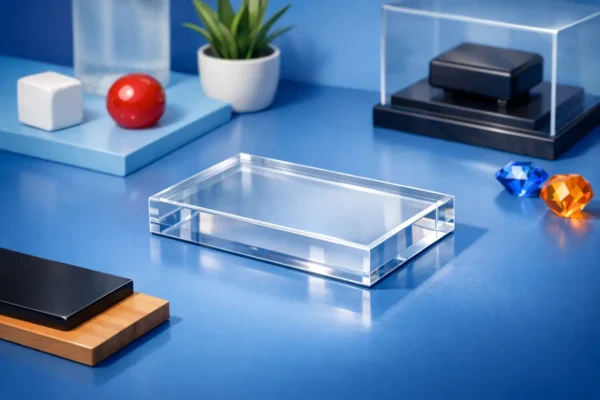
Acrylic block thickness changes the overall presentation more than many buyers expect. Thicker blocks tend to feel more premium and architectural. They create stronger light refraction and a more substantial base. Thinner blocks can be useful when the goal is a lighter, less pronounced support.
For collectibles with strong visual detail, a thicker crystal-clear block often adds a higher-end presentation. For smaller or more delicate pieces, a slimmer profile may keep the display from feeling too heavy.
Matching block styles to collectible types
The best format depends on what you are displaying. A single style does not work across every category, which is why a focused acrylic product assortment matters.
Figurines, models, and sculptural items
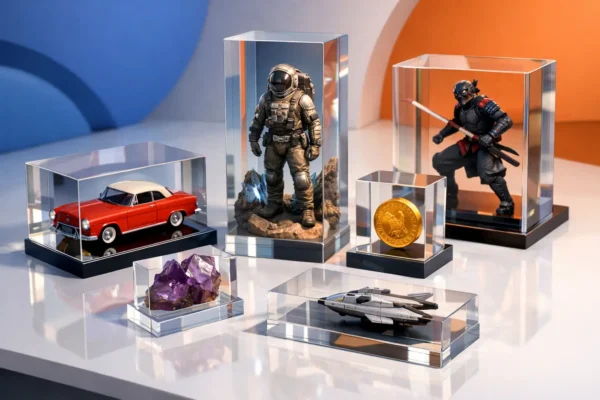
Three-dimensional collectibles usually benefit from solid rectangular or square blocks that provide a stable platform and enough visual mass to support the object. If the item has strong vertical presence, a lower and wider block often creates better balance. If the piece is compact but highly detailed, a taller block can help isolate it and improve sightlines.
For sculptural items, clear acrylic is particularly effective because it keeps the emphasis on form. The block becomes part of the presentation without becoming part of the story.
Sports memorabilia and signed items
Signed baseballs, mini helmets, display-worthy pucks, and similar memorabilia often require a combination of support and elevation. In these cases, acrylic blocks can act as a foundation beneath a stand, holder, or case, or as a visual riser in a broader arrangement.
The key is consistency. When multiple signed items are displayed together, using coordinated clear blocks creates a cleaner and more professional layout. That is often the difference between a collection that looks assembled and one that looks curated.
Coins, crystals, and small premium objects
Small collectibles need precision. If the base is oversized, the object can look lost. If the base is too slight, the display may feel unfinished. Compact acrylic cubes and blocks are often a strong choice here because they add clarity and weight without taking over the footprint.
These applications also benefit from high-quality fabrication. Clean edges, consistent dimensions, and polished surfaces make a visible difference when the collectible itself is small and every detail is easier to judge.
When risers may be better than blocks
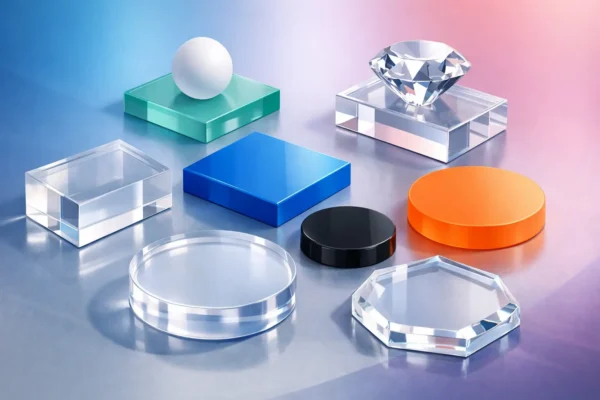
Some buyers use the terms interchangeably, but blocks and risers serve slightly different functions. A solid block gives a denser, more substantial look. A riser is often better when you need to create tiers, improve line of sight across multiple items, or build a merchandising display with depth.
If you are displaying one featured collectible, a block may be the stronger choice because it feels more permanent and more refined. If you are organizing a group of collectibles, risers may help you create levels and avoid visual crowding. It depends on whether the priority is spotlighting one object or organizing several.
Why material quality matters
For display applications, acrylic quality is not a minor detail. Lower-grade material can look cloudy, scratch more easily, or lose the clean presentation buyers expect. Precision fabrication matters too. Uneven edges, inconsistent polishing, or poor dimensional accuracy can undermine the look of the entire display.
High-clarity solid acrylic gives collectibles a cleaner presentation because it allows light to pass through with minimal visual interference. It also holds up well in long-term use, which is important for collectors who expect permanence and for business buyers who need dependable display components for repeated setups.
Made-in-USA manufacturing is relevant here for another reason. For many buyers, especially retailers, galleries, and event professionals, reliable production standards and consistent product quality are as important as appearance. A display component should look precise and arrive ready to perform.
Customization can add function, not just branding
For some collectible displays, a standard block is enough. For others, customization improves both presentation and usability. Printed or engraved acrylic can identify a piece, reinforce branding in a retail environment, or add a commemorative element for limited editions, awards, or event displays.
The best use of customization is controlled and purposeful. A discreet engraved title or brand mark can add context without distracting from the collectible. Overdone graphics can pull attention away from the object. As with the block itself, restraint usually creates the stronger result.
This is where a specialized manufacturer has a clear advantage. Acrylic Bases and Blocks offers product categories and custom options built for presentation use, which helps buyers move beyond generic hardware and toward a more finished display solution.
A better display starts with the right proportions
The most effective collectible displays rarely look complicated. They look resolved. The item feels centered, supported, and visually elevated. The base fits the object. The material stays clear and unobtrusive. Nothing looks accidental.
That is what good display blocks for collectibles are meant to do. They do not compete for attention. They create the kind of presentation that makes the collectible look more deliberate, more valuable, and easier to appreciate. When the proportions are right, the difference is immediate and worth seeing every day.