How to Display Collectibles With Acrylic Risers

A collection can lose its impact when every piece sits on the same flat surface. Learning how to display collectibles with acrylic risers gives each item a defined place in the arrangement, allowing smaller, rarer, or more detailed pieces to be seen without visual clutter. The goal is not simply to add height. It is to create a clear viewing order that makes the collection feel intentional.
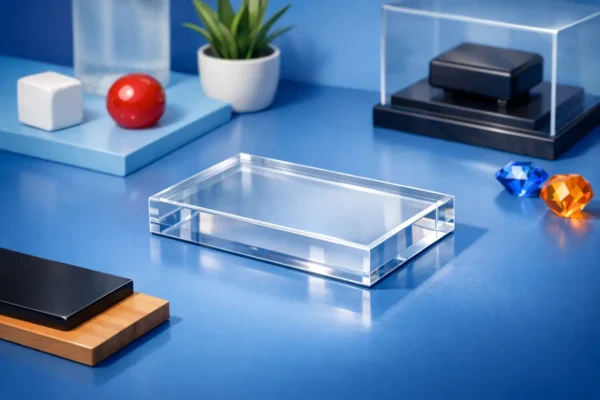
Solid acrylic is especially effective because it adds elevation without competing with the object. Its crystal-clear appearance keeps attention on the collectible, while its precision-fabricated form provides a clean, professional foundation for home displays, retail cases, gallery installations, and event presentations.
Start With the Viewing Angle
Before selecting riser sizes, consider where people will see the collection. A display on a low shelf is viewed from above, while a retail counter or museum-style case is often viewed from the front and at eye level. The correct riser arrangement changes with that angle.
For a shelf display, use gradual height changes so items toward the back remain visible without looking stacked. In a glass case, a stronger tiered layout can work well because the enclosure frames the group and creates more depth. For a countertop display, keep the tallest pieces low enough that they do not block the sightline across the counter.
A good rule is to place the largest or most visually significant item at the back or center, then support surrounding pieces with lower risers. This creates a hierarchy without making every collectible compete for attention.
Choose Acrylic Risers by Size, Weight, and Footprint
The best acrylic riser is not always the tallest one. Its top surface should comfortably support the base of the item, with enough margin that the collectible feels secure rather than perched. A compact coin slab, miniature figure, or small crystal can sit effectively on a narrow block. A sculpture, signed sports item, model, or framed keepsake needs a wider footprint and a more substantial display form.
Weight matters just as much. Solid acrylic provides dependable support for many collectible applications, but the riser must be proportioned to the object being displayed. Broad, heavy pieces need a stable base with sufficient thickness and surface area. Avoid using a tall, narrow riser for a top-heavy object, even if the dimensions appear to fit. A lower, wider block will usually deliver a more secure and refined result.
For professional environments, consistency also matters. Matching riser thicknesses and clean, square edges create a more organized presentation across multiple shelves or cases. If the items vary widely in size, use a limited family of heights rather than a different riser for every object.
How to Display Collectibles With Acrylic Risers in Tiers
Tiering is one of the most effective ways to improve visibility in a collection. Arrange risers from low to high, typically front to back, so each piece has open space around it. The height difference does not need to be dramatic. Even a modest elevation can separate objects visually and prevent the display from looking crowded.
Start with two or three levels. A low front level creates an accessible focal area, a medium riser brings secondary items forward, and a taller back riser keeps the rear row visible. More levels may be appropriate for a large retail fixture or deep display case, but too many heights can make a collection look busy.
Leave intentional gaps between pieces. Acrylic risers improve organization, but they cannot solve overcrowding on their own. If objects overlap visually, reduce the number on display or rotate part of the collection. A smaller presentation with clear spacing often looks more valuable than a packed shelf.
Use Odd-Numbered Groupings for Small Collections
When displaying a small group of related items, such as three designer toys, five mineral specimens, or a set of collectible bottles, odd-numbered groupings often create a more natural composition. Place the most important item on the tallest or most central riser, then use lower forms to support the remaining pieces.
This is a visual guideline, not a requirement. A matched pair of awards, two signed helmets, or a set of identical limited-edition figures may look strongest in a symmetrical arrangement. The collection itself should determine whether balance or asymmetry serves the display better.
Keep the Riser Clear of Labels and Details
Acrylic is visually unobtrusive, but a poorly placed riser can still hide a maker’s mark, serial number, product label, or important base detail. Position the riser so the collectible remains readable from its primary viewing angle. For objects with detailed undersides or transparent bases, consider supporting the piece at the edges or using a block arrangement that preserves the view.
Match the Form to the Collectible
Rectangular acrylic risers are the most versatile choice for boxed figures, books, framed memorabilia, model vehicles, art objects, and merchandise. Their straight lines work well in shelf displays and grid-based retail layouts. Square cubes and blocks are useful for smaller three-dimensional pieces that need a distinct pedestal effect.
Round acrylic display forms can soften a presentation and complement circular objects such as sports balls, medallions, watches, decorative vessels, or sculptural pieces. They are especially useful when a rectangular base would feel too formal or visually heavy.
The form should support the character of the collectible rather than compete with it. A clean rectangular riser may be the best choice for a modern art object, while a polished cube can give a limited-edition figure or award a more substantial presence. When the display includes multiple object types, repeating one or two acrylic forms helps unify the presentation.
Plan for Light, Reflection, and Background
Acrylic responds well to lighting, but reflections can either enhance or distract from the display. In a brightly lit case, clear risers can create a floating effect that makes objects appear more prominent. Direct, harsh lighting may also reveal fingerprints, dust, and reflections from nearby glass.
Use soft, even lighting where possible. Aim lights toward the collectible rather than directly at the riser, particularly with glossy packaging, metal finishes, or clear protective cases. A neutral background allows the acrylic to remain nearly invisible, while a dark background can make the edges of clear acrylic more defined.
For retail and gallery applications, test the arrangement from the customer or visitor viewpoint before finalizing it. A riser that looks excellent from above may cast a distracting shadow or conceal an item when viewed straight on.
Protect Both the Collectible and the Display Surface
Acrylic display components should be placed on clean, level surfaces. Dust or grit beneath a riser can scratch the shelf or reduce stability. Before arranging a collection, wipe the display surface and the acrylic with a clean microfiber cloth.
Avoid abrasive cleaners, paper towels, and ammonia-based products, which can dull or damage acrylic over time. Use a cleaner suitable for acrylic or a soft cloth lightly dampened with water for routine care. Handle risers by their edges when possible to reduce fingerprints on visible surfaces.
For delicate collectibles, confirm that the contact point is appropriate for the material. Painted finishes, soft vinyl, antique wood, and certain metals may benefit from a protective barrier or a display method that minimizes direct pressure. The presentation should look premium, but preservation remains the priority.
Add Branding or Identification When the Display Requires It
Collectors may prefer a clean, unmarked presentation. Retailers, galleries, event teams, and award programs often need the display itself to communicate more. Custom printing or engraving can add a product name, edition number, logo, artist information, or recognition message directly to an acrylic base.
This approach is especially useful when the object cannot carry its own label or when a separate card would interrupt the visual presentation. The best result is restrained and readable. Keep text concise, place it where it does not compete with the collectible, and ensure the contrast suits the display environment.
Acrylic Bases and Blocks produces solid acrylic display products made in the USA for these types of presentation needs, from standard risers and cubes to custom display components designed for branded or specialized applications.
Build a Display That Can Evolve
Most collections change over time. Leave room for new additions instead of filling every available inch from the start. Modular acrylic blocks and risers make it easier to adjust height, replace a focal item, or reorganize a shelf without rebuilding the entire display.
Begin with the pieces that deserve the strongest visibility, then use clear elevation to give every supporting item a defined role. When the riser dimensions, spacing, and sightlines are right, the acrylic nearly disappears and the collection takes on the polished presence it deserves.