How a Round Acrylic Riser Display Improves Presentation

A round acrylic riser display does more than lift an item off a shelf or tabletop. It creates separation, improves sightlines, and gives the displayed piece a more intentional presence. For retail merchandise, collectibles, art objects, desserts, awards, and branded event materials, that added elevation can directly affect how customers perceive value.
The circular format is especially effective when the object itself has a curved profile or needs visual focus from every angle. Unlike a rectangular platform that introduces hard corners into the composition, a round riser creates a centered, balanced foundation. When fabricated from premium solid acrylic, it delivers that effect without competing with the item on display.
Why Choose a Round Acrylic Riser Display?
Acrylic is valued in professional display environments because it is clear, durable, and visually clean. A properly fabricated solid acrylic riser gives an object height while allowing light to move through the support. The result is a display that feels less obstructed than wood, metal, or opaque plastic.
The round shape adds another practical advantage: it naturally directs attention toward the center. This makes it an excellent choice for a single product, sculpture, collectible, award, cosmetic item, or food presentation. It also works well on tables where customers or guests approach from multiple sides. There is no front edge that dictates viewing direction.
For businesses, the benefit is straightforward. Elevation helps create hierarchy. A featured product placed on a clear circular platform reads as more important than identical items sitting flat on the same surface. In a compact retail fixture or trade show display, that distinction can make limited space work harder.
Selecting the Right Diameter and Height
The right riser size depends on the item being displayed, the available surface area, and the viewing distance. A platform that is too small can make a product feel unsupported. One that is too large may introduce unnecessary empty space and weaken the visual impact.
Start with the footprint of the item. The riser should provide a stable base with enough visible acrylic around the object to look deliberate, rather than accidental. For a small collectible or perfume bottle, a narrow diameter may provide the cleanest result. For a sculpture, cake stand application, or grouped retail arrangement, a wider circle gives the composition room to breathe.
Height should be selected with equal care. Low risers are useful for subtle separation, particularly in glass cases, on shelves, or within a layered merchandise display. Medium heights create stronger hierarchy and are often suited to countertop retail, gallery pedestals, and product photography. Taller risers establish a focal point, but they should only be used when the displayed object remains stable and easy to view.
There is no universal best height. A tall riser can create impact at an event table, yet be impractical inside a shallow display case. Likewise, a low riser may be ideal for a delicate art object but fail to distinguish a featured retail item in a busy store environment. The display setting should guide the decision.
Consider Weight and Center of Gravity
Acrylic offers dependable support, but the riser must be matched to the load. Heavier objects need sufficient thickness, a diameter that supports their footprint, and a stable center of gravity. This is particularly relevant for trophies, sculptures, product samples, and items with uneven bases.
Solid acrylic is a professional choice because it has substantial visual and physical presence. Thin, lightweight alternatives may appear similar at first glance, but they can flex, scratch more easily, or look less refined under retail lighting. For high-visibility applications, material quality is part of the presentation.
Applications That Benefit From Circular Elevation
Round risers are highly adaptable because their form does not tie them to one industry or display style. They can be used as a single focal platform or repeated at several heights to build a more dimensional arrangement.
In retail, circular acrylic platforms help feature jewelry, accessories, cosmetics, fragrances, footwear accents, small electronics, and specialty goods. Clear risers preserve the product’s color palette and packaging while adding a polished, elevated look to shelves and counters.
Collectors often use them for sports memorabilia, figurines, model pieces, mineral specimens, and designer objects. The transparency keeps attention on the collection rather than the display hardware. A round form is also a natural fit for objects that are viewed in the round, such as a signed baseball, art glass, or small sculpture.
Galleries and artists can use solid acrylic circles to raise individual pieces within a case, on a plinth, or as part of a tabletop installation. The material is especially useful when the goal is to support the work discreetly while maintaining a contemporary, precise appearance.
For events and food service, acrylic risers can create variation across buffet tables, dessert stations, registration displays, product launches, and corporate recognition presentations. In these settings, multiple heights help guests see what is available without crowding every item onto a single plane.
Build a Stronger Display With Layered Heights
A single riser adds emphasis. A coordinated group of round risers can organize an entire presentation. The most effective arrangements usually use two or three heights, with the tallest element reserved for the primary item and lower platforms supporting complementary pieces.
Keep the composition controlled. Too many different heights or diameters can make a display look busy, especially when the products themselves have bold packaging or intricate details. Repeating one acrylic thickness and a limited range of sizes creates consistency while still adding depth.
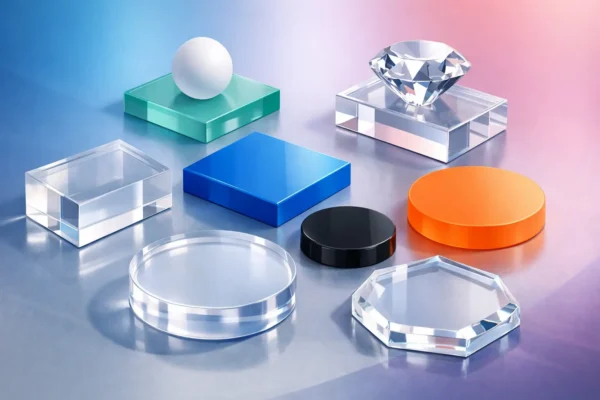
Circular risers also pair well with rectangular acrylic blocks, creating contrast between soft curves and clean linear geometry. This can be useful in a retail display that needs structure without looking rigid. For example, a round riser may hold the featured product while rectangular blocks support signage, secondary merchandise, or supporting objects.
Lighting matters as well. Clear acrylic can catch reflections under direct spotlights, which may be desirable for jewelry, glassware, and awards. In other environments, diffused lighting may better preserve the nearly invisible support effect. Testing the riser in the intended lighting conditions helps avoid distracting glare.
Custom Details for Branded Presentations
Standard clear acrylic risers meet many display needs, but branded environments may benefit from custom printing or engraving. A logo, event name, product mark, or recognition message can turn a display component into part of the presentation itself.
This approach is particularly effective for corporate awards, product launches, museum retail, sponsored events, and point-of-purchase displays. The key is restraint. A subtle engraved mark on a riser can reinforce ownership and quality without pulling attention away from the featured object. Large, high-contrast graphics may be appropriate for promotional fixtures, but they are not always the right choice for fine art, luxury goods, or collectible displays.
Acrylic Bases and Blocks produces precision-fabricated, Made in USA display components for buyers who need dependable standard sizes as well as presentation-focused custom options. For professional merchandising and recognition programs, consistency across multiple pieces is often as valuable as the clarity of the material itself.
Care That Preserves Crystal-Clear Appearance
Clear acrylic should be handled as a finished display surface, not as disposable packaging. Dust it with a clean, soft microfiber cloth, and use an acrylic-safe cleaner when needed. Avoid abrasive pads, paper towels, and harsh solvents, which can leave fine scratches or cloud the surface.
When storing multiple risers, separate them with soft protective material instead of stacking acrylic directly against acrylic. This simple step helps preserve polished edges and clear faces, especially for inventory used repeatedly at events or in changing retail displays.
A round acrylic riser display is most effective when it looks effortless: stable beneath the item, clean under the light, and proportioned to make the product or object feel worth noticing. Choose the diameter, height, and material thickness with the displayed piece in mind, and the riser becomes a quiet but powerful part of the presentation.