Engraving Versus Printing for Acrylic Displays
A clear acrylic award block can carry a corporate logo, recipient name, and event date without distracting from its crystal-clear form. A retail riser may need bold brand color that reads from several feet away. Those are different presentation needs, which is why engraving versus printing is not simply a matter of preference. The right choice affects visibility, perceived value, durability, and how well a custom acrylic piece performs in its intended setting.
For display bases, blocks, cubes, and risers, customization should support the object being presented. Engraving creates a refined, permanent mark within or on the surface of the acrylic. Printing adds color, graphic range, and immediate visual impact. Both can be precision-applied to solid acrylic, but each has distinct strengths.
Engraving Versus Printing: The Core Difference
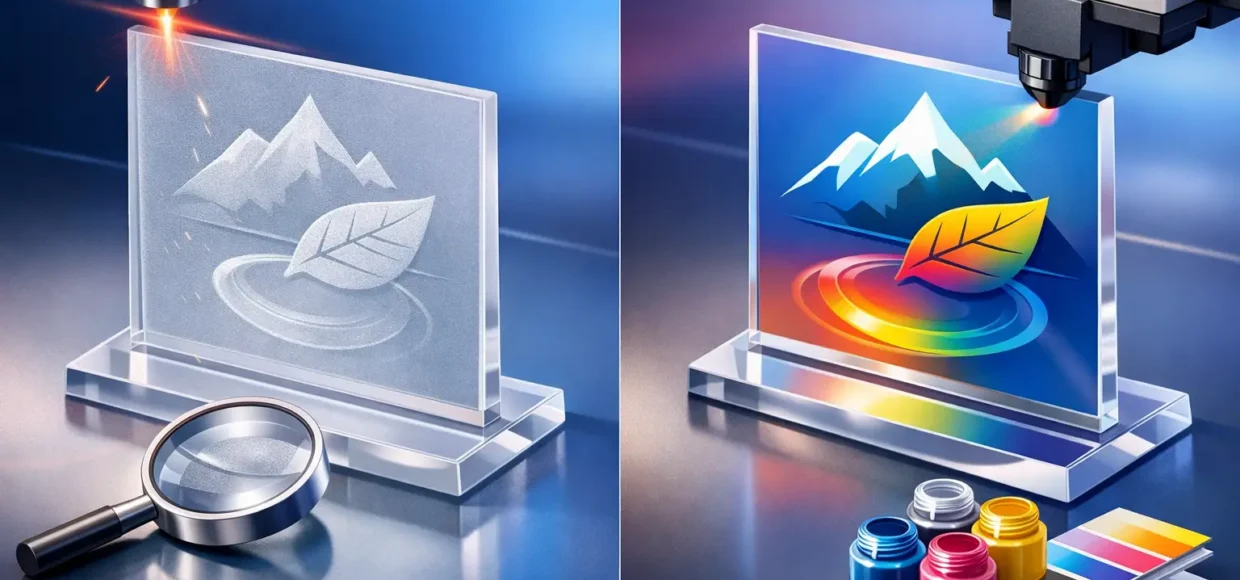
Engraving removes or alters a controlled portion of the acrylic surface to create a design, lettering, or image. Depending on the process and artwork, the result may appear crisp white, frosted, or subtly etched. The mark becomes part of the piece rather than an applied graphic layer.
Printing places ink directly onto the acrylic surface. It can reproduce logos, text, color fields, gradients, and detailed artwork that engraving cannot communicate in the same way. A printed design can be discreet and minimal, but it can also become the most visible feature of a display.
The decision usually comes down to one question: should the customization feel integrated into the acrylic, or should it deliver a bold visual message? Engraving is often selected for premium recognition pieces, architectural-style signage, gallery labels, and understated branded displays. Printing is frequently the better fit for retail merchandising, promotional displays, colorful event materials, and designs that rely on accurate logo colors.
When Engraving Is the Better Choice
Engraving works especially well when permanence and restrained presentation matter most. A name, serial number, dedication, or logo can be added to an acrylic block or base with clean definition while preserving the material’s polished, high-clarity appearance.
For awards and recognition, engraved personalization carries a sense of craftsmanship that printed text may not always convey. The design is physically defined in the acrylic, giving the piece dimension even when the layout is simple. This makes engraving a strong choice for executive gifts, donor recognition, commemorative displays, and premium collectibles.
It is also well suited to applications where the acrylic will be handled regularly. An engraved mark does not sit on top of the surface as an ink layer does. While any acrylic piece should still be cleaned with appropriate non-abrasive materials, engraving offers confidence for long-term identification and repeated use.
Engraving has practical limits. Fine photographic detail, multicolor artwork, and complex shaded graphics are not its natural strengths. Small lettering must also be sized thoughtfully so it remains legible and clean. The best engraved artwork is usually high contrast, well spaced, and designed with the acrylic’s transparency in mind.
The Visual Character of Engraved Acrylic
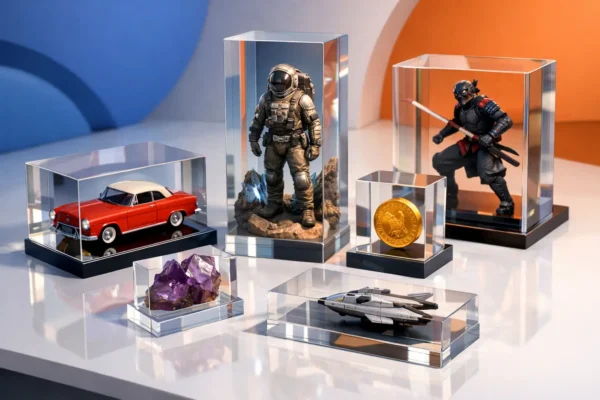
An engraved treatment is often quiet rather than loud. That is its advantage. On a clear display base beneath a sculpture, sports collectible, model, or product sample, the mark can provide essential identification without competing with the displayed item.
Lighting matters. Engraved areas can catch light differently from polished acrylic, making the design more visible from certain angles. On illuminated displays, edge-lit acrylic, or pieces placed near directional lighting, this effect can add sophistication. In low-contrast settings, however, engraving may be less immediately visible than a printed graphic.
When Printing Is the Better Choice
Printing is the clear choice when color accuracy or graphic detail drives the project. Brand standards often require a logo to appear in specific colors, and retail displays may need copy that customers can read at a glance. Printed acrylic makes those requirements easier to meet.
A full-color logo on a countertop block, a promotional message on a product riser, or a detailed image on an event display can create a stronger visual signal than engraving. Printing also allows for larger areas of color, multiple type weights, fine line art, and more elaborate compositions.
For visual merchandising, viewing distance is a major consideration. Shoppers are rarely standing inches from a display. A printed headline, color band, or logo can establish hierarchy quickly from across a counter or aisle. That makes printing useful when the display itself has a selling role, not just a supporting role.
Printing can also support creative placement. Depending on the product and design, graphics may be applied to a face, back surface, or selected areas that preserve a clean front view. Back-printed acrylic can create depth by allowing the clear material to sit in front of the graphic, an effective option for branded blocks, signs, and presentation pieces.
Planning for Printed Acrylic
Printed graphics should be built for the actual acrylic form, not merely transferred from a screen or paper layout. Transparent material changes how color, contrast, and background elements are perceived. A white underbase may be needed for certain colors to remain vivid, particularly when the display will sit against varied backgrounds.
Artwork quality is equally important. Vector logos and high-resolution files produce the cleanest results. Thin lines, very small type, and edge-to-edge artwork may require special review to ensure the finished piece maintains the precision expected of a premium acrylic display.
Compare Durability, Detail, and Maintenance
Both engraving and printing can provide professional results when matched to the application. Engraving generally has the advantage for permanent text and minimal graphics because the design is part of the acrylic surface. It is an excellent fit for identification that must remain with the piece over time.
Printing has the advantage for visual complexity. It can communicate more information in less space and can maintain brand color where engraving cannot. Modern printing is durable, but the printed surface should still be treated with care. Avoid abrasive pads, harsh solvents, and rough handling that can affect any decorated acrylic surface.
The display environment should guide the decision. A museum-style pedestal label, executive award, or collector display may benefit from engraving’s understated permanence. A cosmetics fixture, point-of-purchase sign, trade show display, or branded event piece may need the immediate color and graphic clarity of printing.
Choose Based on the Display’s Job
The most effective customization starts with the role of the acrylic piece. If the block, base, or riser is primarily there to elevate a product, artwork, or collectible, engraving often keeps the focus where it belongs. A small etched title, maker name, or edition number can add context without visual clutter.
If the acrylic component must actively attract attention, explain an offer, or reinforce a brand, printing may deliver more value. Color creates fast recognition, particularly in retail, event, and promotional environments where several messages compete for attention.
There is also room for a combined approach. A display can use printed color for a logo or headline and engraving for a recipient name, product number, or permanent identification. This works particularly well for corporate awards, limited-edition presentation pieces, and branded displays that need both impact and longevity.
Before finalizing a custom project, consider the viewing distance, lighting, background, handling frequency, and expected lifespan. Also consider whether the acrylic will be photographed. Engraved marks can look elegant in close-up photography, while printed graphics often reproduce more clearly in wider retail or event images.
Artwork and Material Details Matter
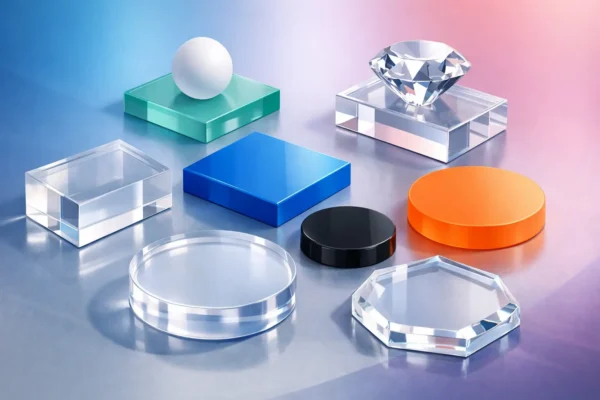
Solid acrylic offers a polished, professional platform for both customization methods, but thickness, edge finish, shape, and placement all influence the result. A thick acrylic block can create visual depth around an engraved design. A broad rectangular riser may offer the surface area needed for a large printed logo. Round bases and compact cubes often call for simpler layouts that respect the form.
Domestic precision fabrication also helps ensure that the customized area is correctly positioned relative to the finished product. A logo that is even slightly off center can undermine an otherwise premium display. Accurate dimensions, clean edges, and thoughtful artwork placement are what make personalization feel intentional rather than added as an afterthought.
Acrylic Bases and Blocks helps customers match custom printing and engraving to solid acrylic display forms made for professional presentation. The strongest projects begin with a clear idea of what must be seen first: the brand, the message, or the item on display.
Choose engraving when the mark should feel permanent, refined, and secondary to the object. Choose printing when color, detailed graphics, and instant visibility carry the message. A well-made acrylic display does more than hold an item at the right height – it gives every detail a more deliberate place to be seen.