What Size Acrylic Riser Do I Need for My Display?
A riser that is only an inch too short can disappear beneath the product it is meant to feature. One that is too tall can make merchandise feel disconnected from the display. If you are asking, “what size acrylic riser do I need,” start with the item’s dimensions, weight, viewing distance, and the visual hierarchy you want to create. The right riser should make the product more visible while keeping the presentation clean, balanced, and secure.
For most displays, choose a riser with a top surface that supports the item comfortably, a height that creates noticeable separation, and solid acrylic thickness appropriate to the load. Those three decisions determine whether a display looks professionally merchandised or improvised.
Start With the Item You Are Displaying
Measure the length, width, and weight of the object before selecting an acrylic riser. Do not rely only on the item’s widest point. Consider its actual contact area with the riser as well. A sculpture with a narrow base, for example, needs a platform sized for stability even if the sculpture itself extends beyond the edges.
As a practical starting point, the riser top should be at least as large as the object’s base. For freestanding retail displays, collectibles, framed art, awards, and fragile pieces, allowing approximately 1 to 2 inches of visible acrylic around the base usually produces a more deliberate presentation. This border gives the product visual breathing room and makes the crystal-clear material read as a display element rather than an undersized support.
A smaller platform can be appropriate when you want a floating visual effect, but it should never compromise balance. If the item has an uneven center of gravity, a broad overhang, or frequent customer interaction, choose a larger footprint.
What Size Acrylic Riser Do I Need for Height?
Height is the dimension that creates hierarchy. It directs the eye to featured merchandise, separates products that would otherwise blend together, and makes better use of limited counter, shelf, or tabletop space.
For a single item on a counter, a 1- to 2-inch riser often provides enough lift for small products such as jewelry, cosmetics, product samples, cards, or compact collectibles. A 3- to 4-inch riser is a versatile choice for medium-sized merchandise, small sculptures, awards, and retail feature displays. For larger products or displays viewed from a distance, 6 inches or more can create the elevation needed to establish a clear focal point.
The setting matters as much as the product. A riser on a low table may need additional height so visitors can see the item without bending. On a retail shelf at eye level, a shorter riser may be more effective because excessive elevation can block signage or obscure products placed behind it. Gallery and museum-style presentations also tend to favor restrained elevation, allowing the artwork or object to remain the primary visual statement.
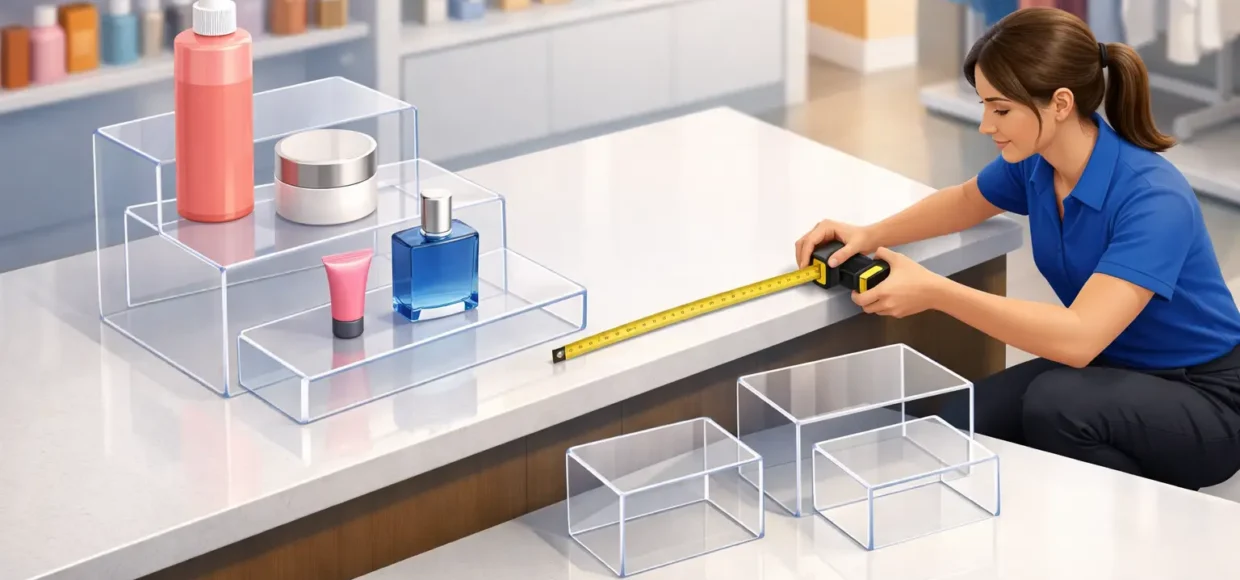
When displaying several items, use two or three heights rather than placing every product on the same level. A simple stepped arrangement creates depth and prevents a flat, crowded appearance. For example, a 2-inch riser in front, a 4-inch riser at center, and a 6-inch riser toward the rear can organize a tabletop collection without overwhelming it.
Size the Footprint for Stability and Presentation
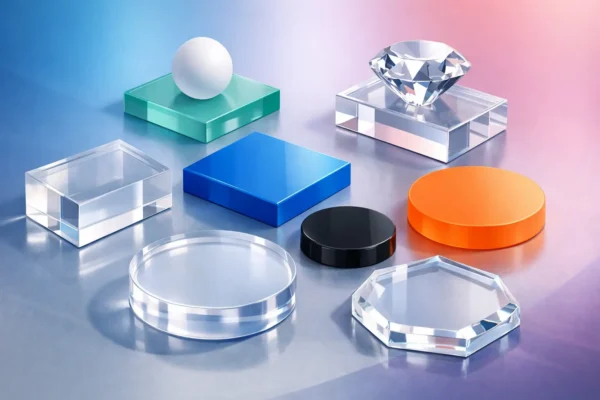
Acrylic risers are commonly selected in square, rectangular, and round formats. The best shape should follow the shape of the product and the layout of the display.
Square risers work well for bottles, boxed merchandise, figurines, awards, and objects with compact bases. Their equal dimensions make them easy to arrange in grids, especially in retail and event displays. Rectangular risers are better suited to longer products, grouped merchandise, handbags, framed pieces, models, and art objects that need a wider visual base. Round risers complement circular products such as bowls, candles, cakes, small vessels, and decorative objects, while softening displays built around straight lines.
For a display featuring multiple products, plan the riser footprint in relation to the available surface. Leave enough open space between risers so each product reads clearly. A tightly packed arrangement may hold more inventory, but it can reduce perceived value and make it harder for shoppers to identify the featured item. Premium merchandise benefits from a little restraint.
Choose Thickness Based on Weight and Use
The riser’s thickness affects both appearance and performance. Thick, solid acrylic has a substantial, polished presence that suits high-end retail fixtures, corporate awards, art displays, and heavier objects. A thinner riser can be an efficient choice for lightweight merchandise and temporary displays, but it will not provide the same visual weight or load-bearing confidence.
For lightweight products, a modest solid acrylic thickness may be sufficient. As the item becomes heavier, taller, or more valuable, move toward a thicker acrylic format and a broader base. Tall risers carrying compact but dense objects need particular care because the load is concentrated in a small area and may be easier to tip if bumped.
There is no responsible one-size-fits-all load rating without considering the riser’s exact dimensions, material thickness, construction, and how the object is positioned. If you are displaying stone, metal, glass, electronics, large awards, or one-of-a-kind art, provide the item weight and base dimensions when sourcing the riser. A manufacturer can help match the display component to the application rather than asking a standard piece to do more than it was designed to do.
Consider Viewing Angle and Customer Interaction
A riser is not only a platform. It is part of how customers see, approach, and handle an item.
For products viewed from the front, such as merchandise on a shelf or reception counter, choose height that brings the item into a comfortable sightline without hiding labels, logos, or printed information. For 360-degree displays, such as collectibles, sculptures, and centerpiece products, make sure the riser footprint looks balanced from every side.
Customer handling changes the specification. A riser used under an item that shoppers will pick up repeatedly needs generous stability and a surface that keeps the product easy to reach. Avoid placing easily handled products on excessively tall, narrow risers. For protected display cases or no-touch exhibit environments, you can prioritize dramatic height and a more minimal footprint because the risk of accidental contact is lower.
Match the Riser to the Display Environment
The same product may need a different riser size in a boutique, trade show booth, gallery, or home collection. A trade show display often benefits from taller risers because the goal is to catch attention across an aisle. A retail shelf usually needs a lower profile that fits within existing shelf spacing. At an event, a range of heights can create a polished centerpiece while leaving space for signage, florals, or branded materials.
Lighting also affects the decision. Clear acrylic reflects and refracts light at its polished edges, adding definition without adding visual clutter. Under strong spotlights, a thicker block or riser can create a more substantial illuminated edge. In a small display case with limited light, a shorter riser may preserve sightlines and prevent shadows from falling across smaller objects.
For branded presentations, consider whether the riser will carry printed graphics or engraving. A larger face or thicker solid block provides more room for a logo, product name, donor recognition, or event message. This is especially useful for awards, corporate displays, product launches, and museum-style identification.
A Quick Sizing Framework
Use this sequence when selecting a size:
- Measure the object’s base, overall height, and weight.
- Select a riser top at least equal to the base, with 1 to 2 inches of border for most premium presentations.
- Choose a height that separates the item from its surroundings without blocking sightlines.
- Increase acrylic thickness and footprint as the load, value, height, or customer interaction level increases.
- Review the complete arrangement, not just one item, to create clear tiers and adequate spacing.
When in doubt, prioritize a stable footprint over a dramatic but narrow profile. The best acrylic riser feels intentional: precise enough to frame the product, strong enough for its role, and clear enough to let the display itself command attention.
Acrylic Bases and Blocks manufactures solid acrylic display pieces in the USA for presentations where clarity, precision, and dependable construction matter. Selecting the right dimensions before you build the display gives every product, collectible, award, or work of art the elevation it deserves.