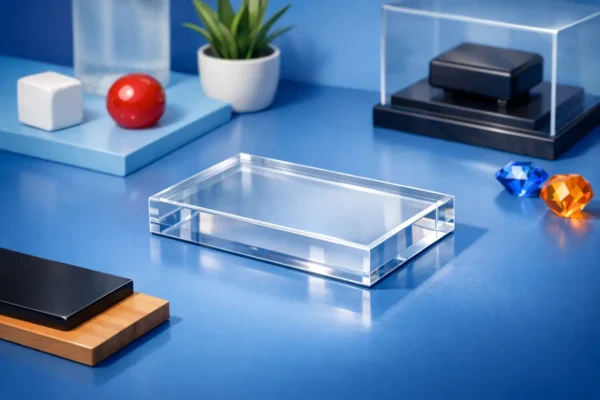
Best Acrylic Bases for Sculptures and Art Displays

A sculpture can be beautifully finished and still look incomplete when it sits directly on a shelf, pedestal, or display case floor. The best acrylic bases for sculptures create separation between the artwork and its surroundings, giving the piece visual presence without competing for attention. For artists, collectors, galleries, and retail display teams, a crystal-clear solid acrylic base is a practical way to improve presentation while providing dependable support.
The right base is not simply the largest or thickest option available. It should suit the sculpture’s footprint, weight, visual character, and display setting. A delicate figurine, a hand-blown glass object, and a dense bronze work each require a different approach to proportion and stability.
What Makes the Best Acrylic Bases for Sculptures?
Acrylic is valued in sculpture display because it is clear, durable, and visually neutral. Quality solid acrylic lets the artwork remain the focal point while adding height, definition, and a clean finished edge beneath it. Unlike improvised wood blocks or painted platforms, clear acrylic works across modern, traditional, retail, and gallery environments.
For a base to perform well, it needs three things: adequate support, appropriate dimensions, and a refined finish. The sculpture should sit securely on the surface without appearing crowded, while the acrylic itself should have polished edges and high optical clarity. Small details matter. A base with clean machining and smooth edges communicates care in the same way a well-lit display or properly spaced label does.
Thickness also affects the visual result. Thin acrylic can feel light and minimal, which may work well for small objects. Thicker solid acrylic creates a more substantial, architectural effect. It can make a compact sculpture feel more important and give a display a stronger sense of permanence.
Start With the Sculpture’s Footprint and Weight
Before selecting a shape or thickness, measure the sculpture at its actual contact points. The widest part of the artwork is not always the area that rests on the base. A sculpture may have a narrow foot, several separate feet, or an irregular underside that calls for more support area than its contact surface suggests.
For most displays, allow a visible acrylic border around the sculpture. A modest border creates definition while keeping the proportions controlled. If the base is nearly the same size as the sculpture’s footprint, it can look accidental. If it extends too far beyond the work, it may shift attention away from the art.
Weight deserves equal consideration. A small but dense sculpture may need a thicker base than a larger lightweight piece. Solid acrylic is durable, but thickness should be selected for both appearance and reliable support. When the object has an uneven center of gravity, use a wider base to reduce the chance of tipping. This is especially relevant for abstract forms, tall figures, works with extended arms or wings, and sculptures mounted off-center.
If the sculpture will be permanently attached, account for the mounting method before ordering. Drilled holes, hardware placement, adhesives, or custom recesses can affect the most suitable dimensions and thickness. A purpose-built base is generally cleaner and more secure than trying to adapt a standard display block after the fact.
Choose the Shape That Supports the Artwork
The base shape should echo the sculpture without becoming decorative on its own. Rectangular acrylic bases are the most versatile choice for figurative work, models, awards, product sculptures, and many contemporary pieces. Their straight lines provide a disciplined, gallery-ready presentation and fit naturally into shelves, cases, and retail fixtures.
Square acrylic bases work particularly well for centered sculptures with a compact footprint. They create balanced negative space on every side and are a strong option for busts, small statuary, mineral specimens, collectible figures, and dimensional brand displays.
Round acrylic bases soften the presentation. They are often effective under circular, organic, or rotational forms, such as glass art, ceramics, globes, small trophies, and sculptural objects meant to be viewed from all directions. A round base can also prevent the display from feeling overly rigid when the sculpture has flowing lines.
For unusually shaped work, a custom acrylic base may be the better investment. An oval, shaped, stepped, or precision-cut format can support the piece more naturally and reduce unused surface area. Custom fabrication is especially useful when a sculpture is part of a branded installation, a limited-edition collectible series, or a retail presentation that requires consistent dimensions across multiple locations.
Match Thickness to Visual Weight
Acrylic thickness does more than add strength. It changes the perceived value of the entire display. A thin platform can nearly disappear beneath a small, refined object. A thicker block gives the same object a more formal, elevated presence.
For small sculptures and lightweight objects, a lower-profile base often provides enough lift without adding visual bulk. Mid-range thicknesses are a practical choice for most collectible, gallery, and retail applications because they balance clarity, support, and proportion. Heavier or taller works may call for thicker solid acrylic, particularly when the base needs to counterbalance a narrow or off-center form.
There is no single thickness that is best for every sculpture. A substantial base beneath a tiny delicate object can look oversized, while a thin sheet beneath a heavy work can feel visually and structurally inadequate. The goal is for the acrylic to look intentional: strong enough to support the object, restrained enough to let the object lead.
Consider the Viewing Environment
A sculpture displayed in a private home has different needs than one used in a jewelry case, museum-style exhibit, trade show booth, or retail merchandising program. Lighting, traffic, cleaning routines, and viewing distance all influence the best choice.
In a gallery or curated collection, clear acrylic bases help establish consistent presentation across works of different colors and materials. Standardized base heights can organize a display and make each object easier to view. For retail, risers and blocks can create levels that improve sightlines and encourage shoppers to notice smaller items that might otherwise disappear behind larger products.
For event displays and awards, acrylic offers another advantage: personalization. Printed graphics, engraved names, logos, edition information, or event details can turn a display base into part of the presentation. This works best when customization is kept deliberate. A discreet engraving can add authority and documentation, while overly prominent graphics may distract from the sculpture itself.
High-traffic settings require extra attention to stability. A base that is appropriate for a protected shelf may not be suitable for a busy showroom counter or public event table. Consider a wider footprint, added weight distribution, non-slip feet, or a secure attachment method when people may brush against the display.
Clarity, Edge Finish, and Fabrication Quality Matter
Not all clear display materials deliver the same result. Premium solid acrylic is selected for its clarity, clean edges, and ability to be precision fabricated into consistent shapes and dimensions. When sculpture presentation is the goal, the base should look polished from every viewing angle, including the side profile.
Look for bases with smooth, finished edges that complement the clarity of the material. Rough edges, visible haze, uneven cuts, or inconsistent dimensions can make a carefully presented sculpture look temporary. This is particularly noticeable under direct lighting, inside glass display cases, and in professional product photography.
Made in USA fabrication also supports consistency when multiple bases are needed for a collection, gallery installation, or retail program. Acrylic Bases and Blocks manufactures premium solid acrylic display forms for customers who need standard formats as well as customized presentation pieces. That combination matters when matching existing displays or planning a coordinated rollout across several locations.
Plan for Care and Long-Term Presentation
Acrylic is durable, but it should be cleaned with care to preserve its clarity. Use a soft microfiber cloth and an acrylic-safe cleaner. Avoid abrasive paper towels, scouring pads, and harsh chemical cleaners that can leave fine scratches or cloud the surface over time.
When placing a sculpture on a base, make sure the underside is clean and free of grit. Even a small particle trapped beneath a heavy object can mark the acrylic or create an uneven resting point. For objects with rough ceramic, stone, or metal undersides, consider whether felt, clear protective pads, or a custom mounting solution is appropriate.
It also helps to think beyond the current display. If a sculpture may move between a shelf, gallery, trade show, and collector presentation, a durable acrylic base gives it a consistent foundation. Choosing a well-proportioned format now can save the effort of replacing an undersized or unsuitable base later.
A clear acrylic base should make viewers notice the sculpture first and the display solution second. When the proportions, thickness, and finish are right, the artwork appears elevated, secure, and ready for its closest look.